Showing posts with label Brad Mehldau. Show all posts

Thursday, July 30, 2026

Kurt Rosenwinkel • Deep Song


Review
by Matt Collar
Guitarist Kurt Rosenwinkel's Deep Song is an intimately atmospheric album that finds the ever-reaching jazz musician in the company of a stellar ensemble. Rosenwinkel has always displayed the strong influences of such expansive players as Pat Metheny, John Scofield, and Pat Martino, and tracks such as the continually overlapping "The Cloister" do nothing if not reinforce such high comparative praise. In fact, Rosenwinkel's moody take on "If I Should Lose You" brings to mind such cerebrally mellow Martino classics as We'll Be Together Again and Cream. Joining him here are the deep-color talents of saxophonist Joshua Redman, pianist Brad Mehldau, bassist Larry Grenadier, and drummers Jeff Ballard and Ali Jackson.
https://www.allmusic.com/album/deep-song-mw0000261967

///////


Reseña
por Matt Collar
Deep Song del guitarrista Kurt Rosenwinkel es un álbum íntimamente atmosférico que encuentra al músico de jazz siempre en compañía de un conjunto estelar. Rosenwinkel siempre ha hecho gala de las fuertes influencias de músicos tan expansivos como Pat Metheny, John Scofield y Pat Martino, y temas como el continuamente superpuesto "The Cloister" no hacen más que reforzar tan altos elogios comparativos. De hecho, la versión malhumorada de Rosenwinkel en "If I Should Lose You" recuerda a clásicos de Martino tan cerebralmente suaves como We'll Be Together Again y Cream. A él se unen aquí los talentos del saxofonista Joshua Redman, el pianista Brad Mehldau, el bajista Larry Grenadier y los bateristas Jeff Ballard y Ali Jackson.
https://www.allmusic.com/album/deep-song-mw0000261967


kurtrosenwinkel.com ...


Sunday, July 19, 2026

Joshua Redman Quartet • MoodSwing


Joshua Redman is one of the most acclaimed and charismatic jazz artists to have emerged in the decade of the 1990s. Born in Berkeley, California, he is the son of legendary saxophonist Dewey Redman and dancer Renee Shedroff. He was exposed at an early age to a variety of musics (jazz, classical, rock, soul, Indian, Indonesian, Middle-Eastern, African) and instruments (recorder, piano, guitar, gatham, gamelan), and began playing clarinet at age nine before switching to what became his primary instrument, the tenor saxophone, one year later. The early influences of John Coltrane, Ornette Coleman, Cannonball Adderley and his father, Dewey Redman, as well as The Beatles, Aretha Franklin, the Temptations, Earth, Wind and Fire, Prince, The Police and Led Zeppelin drew Joshua more deeply into music. But although Joshua loved playing the saxophone and was a dedicated member of the award-winning Berkeley High School Jazz Ensemble and Combo from 1983-86, academics were always his first priority, and he never seriously considered becoming a professional musician.

In 1991 Redman graduated from Harvard College summa cum laude, Phi Beta Kappa with a B.A. in Social Studies. He had already been accepted by Yale Law School, but deferred entrance for what he believed was only going to be one year. Some of his friends (former students at the Berklee College of Music whom Joshua had met while in Boston) had recently relocated to Brooklyn, and they were looking for another housemate to help with the rent. Redman accepted their invitation to move in, and almost immediately he found himself immersed in the New York jazz scene. He began jamming and gigging regularly with some of the leading jazz musicians of his generation: Peter Bernstein, Larry Goldings, Kevin Hays, Roy Hargrove, Geoff Keezer, Leon Parker, Jorge Rossy and Mark Turner (to name just a few). In November of that year, five months after moving to New York, Redman was named the winner of the prestigious Thelonious Monk International Saxophone Competition. This was only one of the more visible highlights from a year that saw Redman beginning to tour and record with jazz masters such as his father, Jack DeJohnette, Charlie Haden, Elvin Jones, Joe Lovano, Pat Metheny, Paul Motian, and Clark Terry. For Joshua, this was a period of tremendous growth, invaluable experience and endless inspiration.

Now fully committed to a life in music, Redman was quickly signed by Warner Bros. Records and issued his first, self-titled album in the spring of 1993, which subsequently earned Redman his first Grammy nomination. That fall saw the release of Wish, where Joshua was joined by the all-star cast of Pat Metheny, Charlie Haden and Billy Higgins. He toured extensively with Metheny throughout the latter half of that year. His next recording, MoodSwing, was released in 1994, and it introduced his first permanent band, which included three other young musicians who have gone on to become some of the most important and influential artists in modern jazz: pianist Brad Mehldau, bassist Christian McBride and drummer Brian Blade. A later edition of this ensemble included guitarist Peter Bernstein, pianist Peter Martin, bassist Chris Thomas and Blade. Over a series of celebrated recordings including Spirit of the Moment/Live at the Village Vanguard, Freedom in the Groove and Timeless Tales (for Changing Times), Redman established himself as one of the music’s most consistent and successful bandleaders, and added soprano and alto saxophones to his instrumental arsenal. Joshua’s second acclaimed quartet, featuring pianist Aaron Goldberg, bassist Reuben Rogers and drummer Gregory Hutchinson, was formed in 1998 and made its recorded debut on the 2000 album Beyond. The dynamic interplay and uncommon rapport of this group inspired Redman to write and record his first long-form composition, Passage of Time, which was released in 2001.

A year later, Redman began to channel his jazz sensibilities through new instrumentation and formed The Elastic Band, a flexible, electrified, groove-based trio built on an ongoing collaboration with keyboardist Sam Yahel and drummer Brian Blade. The band debuted on the 2002 releases yaya3 and Elastic. Drummer Jeff Ballard began to play regularly with the Elastic Band later that year, and he (along with Blade and Yahel) played a central role in their next recording, the Grammy-nominated Momentum, which was released in 2005 to inaugurate Redman’s affiliation with Nonesuch Records, and featured a diverse and exciting lineup of special guests.

In 2000, Redman was named Artistic Director for the Spring Season of the non-profit jazz-presenting organization SFJAZZ. Redman and SFJAZZ Executive Director Randall Kline had an idea that The New York Times called a “eureka moment”; the creation of the SFJAZZ Collective, an ensemble distinguished both by the creativity of its members and a unique primary emphasis on composition. Inaugurated in 2004, the eight-piece band consists of a multi-generational cast of accomplished musicians. The Collective’s repertoire features both commissioned works and new arrangements of the work of great modern jazz composers. In March 2007, Redman announced that he was taking a hiatus from both the SFJAZZ Artistic Directorship and the SFJAZZ Collective in order to focus on new projects.

The following month, Nonesuch released Redman’s first ever piano-less trio record, Back East, featuring Joshua alongside three stellar bass and drum rhythm sections (Larry Grenadier & Ali Jackson, Christian McBride & Brian Blade, Reuben Rogers & Eric Harland) and three very special guest saxophonists (Chris Cheek, Joe Lovano and Dewey Redman). On Compass, released in January 2009 (Nonesuch), Joshua continues to explore the expansive trio format, and with a group of collaborators as intrepid as he is – bassists Larry Grenadier and Rueben Rogers, and drummers Brian Blade and Gregory Hutchinson – Redman literally and figuratively stretches the shape of the trio approach; on the most audacious of these tunes, he performs with the entire lineup in a double-trio setting.

Starting in late 2009, Joshua will be performing with a new collaborative band called James Farm featuring pianist Aaron Parks, bassist Matt Penman, and drummer Eric Harland. The band infuses traditional acoustic jazz quartet instrumentation with a progressive attitude and modern sound, creating music that is rhythmically and technically complex and at the same time harmonically rich, melodically satisfying, and emotionally compelling.

In addition to his own projects, Redman has recorded and performed with musicians such as Brian Blade, Ray Brown, Dave Brubeck, Chick Corea, The Dave Matthews Band, Jack DeJohnette, Bill Frisell, Aaron Goldberg, Larry Goldings, Charlie Haden, Herbie Hancock, Roy Hargrove, Roy Haynes, Billie Higgins, Milt Jackson, Elvin Jones, Quincy Jones, Big Daddy Kane, Geoff Keezer, B.B. King, The Lincoln Center Jazz Orchestra, DJ Logic, Joe Lovano, Yo Yo Ma, Branford Marsalis, Christian McBride, John Medeski, Brad Mehldau, Pat Metheny, Marcus Miller, Paul Motian, MeShell Ndegeocello, Leon Parker, Nicholas Payton, John Psathas, Simon Rattle, Dewey Redman, Dianne Reeves, Melvin Rhyne, The Rolling Stones, The Roots, Kurt Rosenwinkel, John Scofield, Soulive, String Cheese Incident, Clark Terry, Toots Thielemans, The Trondheim Jazz Orchestra, Mark Turner, McCoy Tyner, Umphrey’s McGee, US3, Bugge Wesseltoft, Cedar Walton, Stevie Wonder and Sam Yahel. Joshua Redman has been nominated for 2 Grammys and has garnered top honors in critics and readers polls of DownBeat, Jazz Times, The Village Voice and Rolling Stone. He wrote and performed the music for Louis Malle’s final film Vanya on 42nd Street, and is both seen and heard in the Robert Altman film Kansas City.
https://www.allaboutjazz.com/musicians/joshua-redman/

///////

Joshua Redman es uno de los artistas de jazz más aclamados y carismáticos que surgieron en la década de 1990. Nacido en Berkeley, California, es hijo del legendario saxofonista Dewey Redman y de la bailarina Renee Shedroff. Estuvo expuesto a una edad temprana a una variedad de músicas (jazz, clásica, rock, soul, India, Indonesia, Oriente Medio, Africana) e instrumentos (flauta dulce, piano, guitarra, gatham, gamelan), y comenzó a tocar el clarinete a los nueve años antes de cambiar a lo que se convirtió en su instrumento principal, el saxofón tenor, un año después. Las primeras influencias de John Coltrane, Ornette Coleman, Cannonball Adderley y su padre, Dewey Redman, así como de los Beatles, Aretha Franklin, the Temptations, Earth, Wind and Fire, Prince, The Police y Led Zeppelin atrajeron a Joshua más profundamente a la música. Pero aunque a Joshua le encantaba tocar el saxofón y fue un miembro dedicado del galardonado Conjunto y Combo de Jazz de Berkeley High School de 1983 a 1986, lo académico siempre fue su primera prioridad, y nunca consideró seriamente convertirse en músico profesional.

En 1991, Redman se graduó de Harvard College summa cum laude, Phi Beta Kappa con una licenciatura en Estudios Sociales. Ya había sido aceptado por la Facultad de Derecho de Yale, pero postergó la entrada por lo que creía que solo iba a ser un año. Algunos de sus amigos (exalumnos del Berklee College of Music a quienes Joshua había conocido mientras estaba en Boston) se habían mudado recientemente a Brooklyn y estaban buscando otro compañero de casa que los ayudara con el alquiler. Redman aceptó su invitación para mudarse y casi de inmediato se encontró inmerso en la escena del jazz de Nueva York. Comenzó a tocar y tocar regularmente con algunos de los principales músicos de jazz de su generación: Peter Bernstein, Larry Goldings, Kevin Hays, Roy Hargrove, Geoff Keezer, Leon Parker, Jorge Rossy y Mark Turner (por nombrar solo algunos). En noviembre de ese año, cinco meses después de mudarse a Nueva York, Redman fue nombrado ganador del prestigioso Concurso Internacional de Saxofón Thelonious Monk. Este fue solo uno de los aspectos más destacados de un año en el que Redman comenzó a hacer giras y grabar con maestros del jazz como su padre, Jack DeJohnette, Charlie Haden, Elvin Jones, Joe Lovano, Pat Metheny, Paul Motian y Clark Terry. Para Joshua, este fue un período de tremendo crecimiento, experiencia invaluable e inspiración infinita.

Ahora totalmente comprometido con una vida en la música, Redman firmó rápidamente con Warner Bros.Records y lanzó su primer álbum homónimo en la primavera de 1993, que posteriormente le valió a Redman su primera nominación al Grammy. Ese otoño vio el lanzamiento de Wish, donde Joshua se unió al elenco estelar de Pat Metheny, Charlie Haden y Billy Higgins. Realizó numerosas giras con Metheny durante la segunda mitad de ese año. Su siguiente grabación, MoodSwing, fue lanzada en 1994, y presentó su primera banda permanente, que incluía a otros tres jóvenes músicos que se han convertido en algunos de los artistas más importantes e influyentes del jazz moderno: el pianista Brad Mehldau, el bajista Christian McBride y el baterista Brian Blade. Una edición posterior de este conjunto incluyó al guitarrista Peter Bernstein, el pianista Peter Martin, el bajista Chris Thomas y Blade. A lo largo de una serie de grabaciones célebres que incluyeron Spirit of the Moment/Live at the Village Vanguard, Freedom in the Groove y Timeless Tales (for Changing Times), Redman se estableció como uno de los líderes de banda más consistentes y exitosos de la música, y agregó saxofones soprano y alto a su arsenal instrumental. El segundo cuarteto aclamado de Joshua, con el pianista Aaron Goldberg, el bajista Reuben Rogers y el baterista Gregory Hutchinson, se formó en 1998 e hizo su debut grabado en el álbum Beyond de 2000. La interacción dinámica y la relación poco común de este grupo inspiraron a Redman a escribir y grabar su primera composición de formato largo, Passage of Time, que se lanzó en 2001.

Un año después, Redman comenzó a canalizar su sensibilidad jazzística a través de una nueva instrumentación y formó Elastic Band, un trío flexible, electrificado y basado en el groove construido en una colaboración continua con el tecladista Sam Yahel y el baterista Brian Blade. La banda debutó en los lanzamientos de 2002 yaya3 y Elastic. El baterista Jeff Ballard comenzó a tocar regularmente con Elastic Band más tarde ese año, y él (junto con Blade y Yahel) desempeñó un papel central en su próxima grabación, Momentum, nominada al Grammy, que se lanzó en 2005 para inaugurar la afiliación de Redman con Nonesuch Records, y contó con una alineación diversa y emocionante de invitados especiales.

En 2000, Redman fue nombrado Director Artístico de la Temporada de Primavera de la organización sin fines de lucro SFJAZZ, que presenta jazz. Redman y el director ejecutivo de SFJAZZ, Randall Kline, tuvieron una idea que The New York Times llamó un "momento eureka" ; la creación del Colectivo SFJAZZ, un conjunto que se distingue tanto por la creatividad de sus miembros como por un énfasis primario único en la composición. Inaugurada en 2004, la banda de ocho integrantes consta de un elenco multigeneracional de músicos consumados. El repertorio del Colectivo presenta tanto obras encargadas como nuevos arreglos de la obra de grandes compositores de jazz moderno. En marzo de 2007, Redman anunció que se tomaría un descanso tanto de la Dirección Artística de SFJAZZ como del Colectivo SFJAZZ para concentrarse en nuevos proyectos.

Al mes siguiente, Nonesuch lanzó el primer disco de trío sin piano de Redman, Back East, con Joshua junto a tres secciones estelares de bajo y batería (Larry Grenadier y Ali Jackson, Christian McBride y Brian Blade, Reuben Rogers y Eric Harland) y tres saxofonistas invitados muy especiales (Chris Cheek, Joe Lovano y Dewey Redman). En Compass, lanzado en enero de 2009 (Nonesuch), Joshua continúa explorando el formato de trío expansivo, y con un grupo de colaboradores tan intrépidos como él: los bajistas Larry Grenadier y Rueben Rogers, y los bateristas Brian Blade y Gregory Hutchinson, Redman extiende literal y figurativamente la forma del enfoque de trío; en la más audaz de estas melodías, se presenta con toda la formación en un ambiente de doble trío.

A partir de finales de 2009, Joshua se presentará con una nueva banda colaborativa llamada James Farm con el pianista Aaron Parks, el bajista Matt Penman y el baterista Eric Harland. La banda infunde la instrumentación tradicional de cuarteto de jazz acústico con una actitud progresiva y un sonido moderno, creando música rítmica y técnicamente compleja y al mismo tiempo armónicamente rica, melódicamente satisfactoria y emocionalmente convincente.

Además de sus propios proyectos, Redman ha grabado y actuado con músicos como Brian Blade, Ray Brown, Dave Brubeck, Chick Corea, Dave Matthews Band, Jack DeJohnette, Bill Frisell, Aaron Goldberg, Larry Goldings, Charlie Haden, Herbie Hancock, Roy Hargrove, Roy Haynes, Billie Higgins, Milt Jackson, Elvin Jones, Quincy Jones, Big Daddy Kane, Geoff Keezer, BB. King, La Orquesta de Jazz del Lincoln Center, DJ Logic, Joe Lovano, Yo Yo Ma, Branford Marsalis, Christian McBride, John Medeski, Brad Mehldau, Pat Metheny, Marcus Miller, Paul Motian, MeShell Ndegeocello, Leon Parker, Nicholas Payton, John Psathas, Simon Rattle, Dewey Redman, Dianne Reeves, Melvin Rhyne, Los Rolling Stones, The Roots, Kurt Rosenwinkel, John Scofield, Soulive, String Cheese Incident, Clark Terry, Toots Thielemans, la Orquesta de Jazz de Trondheim, Mark Turner, McCoy Tyner, McGee de Umphrey, US3, Bugge Wesseltoft, Cedar Walton, Stevie Wonder y Sam Yahel. Joshua Redman ha sido nominado a 2 Grammys y ha obtenido los máximos honores en las encuestas de críticos y lectores de DownBeat, Jazz Times, Village Voice y Rolling Stone. Escribió e interpretó la música de la última película de Louis Malle, Vania on 42nd Street, y se ve y se escucha en la película de Robert Altman Kansas City.
https://www.allaboutjazz.com/musicians/joshua-redman/


www.joshuaredman.com ...


Friday, May 22, 2026

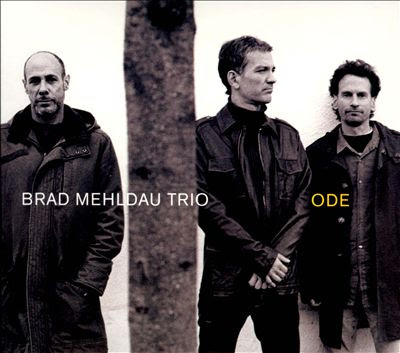
Brad Mehldau • ODE


Review
by Thom Jurek  

Pianist Brad Mehldau has regularly performed with his trio, which has included bassist Larry Grenadier and drummer Jeff Ballard since 2004, when the latter replaced Jorge Rossy. As a trio, they've spent relatively little time in the studio together exclusively -- it's been seven years since Day Is Done. On 2010's Highway Rider, Mehldau augmented the group with Matt Chamberlain, Joshua Redman, and an orchestra. Ode marks the very first album comprised of all Mehldau material cut by this trio. While the title may reflect a a certain ponderousness, these 11 tunes are anything but. Specifically written for this group, they show off an increasingly muscular sense of interplay and stylistic athleticism that wasn't nearly as present on Day Is Done. "M.B." (written in memory of Michael Brecker) states a bluesy theme and moves off into several directions, seemingly at once. Mehldau quickly moves through the head, finds a space, and the band stops on a dime, investigating the various changes seemingly note by note before taking off again. Grenadier's riffing during Mehldau's solo is especially riveting, and his tone is full of wood. Mehldau's soloing on "Stan the Man" is busier, faster, and even denser, as if Art Tatum's wide-reaching blues were his inspiration. On the title track, he maintains the changes and vamp with his left hand as his right hand goes off into free dancing mode. On the Latin-tinged "Dream Sketches," Grenadier's bass solo is not only full of imagination, but twists and turns in groove quotient as well. Ballard's kinetic drumming and percussion are riveting on virtually everything, but here it is exceptionally propulsive. Mehldau's pianism is much more pointillistic; accenting grooves, underscoring them, and finding spaces within them for short, melodic bursts that point to the worlds outside the tune. "Wyatt's Eulogy For George Hanson," begins as a sketchy ballad that moves into a wonderful Grenadier solo before becoming a complex, somewhat dissonant harmonic exploration --Mehldau's use of the lower register is gorgeous. "Aquaman" is another sprint, with quickly shifting ideas and taut interplay. As an album, Odes reveals just how far this group has traveled together these past seven years. More importantly, it provides an exciting glimpse of what may lie on their collective horizon.
https://www.allmusic.com/album/ode-mw0002294650


Biography
by Richard S. Ginell
One of the most acclaimed pianists of his generation, Brad Mehldau is a virtuoso performer with an ear for deeply nuanced, harmonically sophisticated acoustic jazz. While Mehldau is one of the more absorbing and thoughtful practitioners within that idiom, he is also receptive to the idea of using material from the rock era (Paul McCartney's "Blackbird" for example). Though Mehldau's training is primarily classical, his interest in jazz began early and he has subsequently utilized both forms throughout his career. This is evident on his first (of five) Art of the Trio volume, and on 2006's House on Hill and 2010's Day Is Done. Both originals and covers of popular music standards -- from Radiohead to Nick Drake to Paul Simon -- reflect that his playing and compositional style owe as much to the 20th century classical impressionism of Claude Debussy as they do Bill Evans. He delivers classically oriented recordings on his own and with singers Renée Fleming and Anne Sofie von Otter, but he has also issued cross-pollinated explorations of J.S. Bach's classical pieces on After Bach, and worked with the Orpheus Chamber Orchestra on Variations on a Melancholy Theme. Mehldau continues to expand the depth and breadth of the jazz piano tradition, whether playing with his contemporaries Joshua Redman, Christian McBride, and Brian Blade on Round Again, or releasing solo albums like Seymour Reads the Constitution, the Grammy-winning Finding Gabriel, and 2022's prog-rock-inspired Jacob's Ladder.

Born in 1970 in Jacksonville, Florida, Mehldau started playing piano at a young age. Around age ten, he moved to West Hartford, Connecticut where he began taking classical piano lessons. By his teens, he had discovered jazz, listening to artists like Oscar Peterson, John Coltrane, and Keith Jarrett. He played in the Hall High School jazz band in West Hartford, Connecticut, winning the Berklee College of Music's Best All-Around Musician Award while still in his junior year of high school. In college, he studied jazz at New York's New School for Social Research under Fred Hersch, Junior Mance, Kenny Werner, and Jimmy Cobb. Cobb soon hired him to play in his band, Cobb's Mob. Mehldau also played alongside bassist Christian McBride and drummer Brian Blade in saxophonist Joshua Redman's first acoustic quartet before forming his own trio in 1994 and recording his first Warner Bros. album, Introducing Brad Mehldau, in 1995. Art of the Trio, Vol. 1 followed in 1997, with the next two volumes in the series appearing in the following months. Two years later, Mehldau returned with Elegiac Cycle, as well as Art of the Trio, Vol. 4: Back at the Vanguard. Places followed in 2000, consisting of all-original compositions focusing on various cities, hence the title of the album.

Another Art of the Trio album came out in 2001, but the most significant release was Largo, which featured Mehldau performing with other groups outside of his usual trio format. This was a big change from his previous work and offered new challenges as he adapted to several interesting lineup situations. Mehldau followed the genre-bending album with the standards-based Anything Goes and Live in Tokyo in 2004, with Day Is Done arriving the following year. In 2006, he released House on Hill as well as Love Sublime, the latter with soprano vocalist Renée Fleming on Nonesuch Records. Mehldau chose to work with his trio plus Pat Metheny on Quartet in 2007; he followed it up with the double-disc Live in 2008, which was recorded with his trio at the Village Vanguard.

In 2010, Mehldau emerged with the ambitious Highway Rider, a double-disc of 15 new compositions produced by Jon Brion. He employed his trio as well as drummer Matt Chamberlain, saxophonist Joshua Redman, and a small chamber orchestra led by Dan Coleman. Mehldau arranged and orchestrated all the music. Also in 2010, Mehldau was honored by Carnegie Hall when he was named the first jazz artist to hold the Richard and Barbara Debs Composer's Chair for the 2010-2011 season. In 2011, Mehldau appeared on two live albums: His own Live in Marciac and the ECM date Live at Birdland (recorded in 2009) with saxophonist Lee Konitz, bassist Charlie Haden, and drummer Paul Motian. In September of that year, Nonesuch also released a studio album, Modern Music, a collaboration between Mehldau, pianist Kevin Hays, and composer/arranger Patrick Zimmerli. The music on this set comprised tunes by each of the principals, as well as compositions by Ornette Coleman, Steve Reich, and Philip Glass.

On December 6, 2011, while Mehldau was at the beginning of a world tour, Nonesuch issued a box set entitled Art of the Trio Recordings: 1996–2001. The set includes the five Art of the Trio albums -- the last a double-disc -- that were originally issued on Warner Bros. The box also included a seventh disc of previously unreleased material from shows at the Village Vanguard in 1997, 1999, and 2001. A year later, the Brad Mehldau Trio released two studio albums: the all-original Ode and a companion collection of cover songs, Where Do You Start. The pianist then joined drummer/electronicist Mark Guiliana for the duo's collaborative 2014 effort, Mehliana: Taming the Dragon.

The box set 10 Years Solo Live appeared in 2015 and featured solo performances Mehldau had given in Europe in the preceding decade. He then returned to his tried-and-tested trio of Larry Grenadier and Jeff Ballard for 2016's Blues and Ballads, an album that featured their meticulous collective touch on compositions by Cole Porter, Charlie Parker, Lennon/McCartney, and others. Also in 2016, the pianist joined longtime associate saxophonist Joshua Redman for the Grammy-nominated duo album Nearness. The following year, he paired with progressive bluegrass star Chris Thile for the Nonesuch effort Chris Thile & Brad Mehldau, then explored composer J.S. Bach's Well-Tempered Clavier fugues with 2018's After Bach. A few short months later, he was back with another trio album, Seymour Reads the Constitution! His first trio date to include any original material since 2012's Ode, it featured three originals alongside his usual covers of pop songs, jazz tunes, and standards. The pianist continued to stretch himself, playing in guitarist Wolfgang Muthspiel's trio along with Ambrose Akinmusire on the ECM date Where the River Goes. He closed out the year with the archival duo offering Long Ago and Far Away with the late bassist Charlie Haden, recorded at the Enjoy Jazz Festival in Mannheim, Germany in 2007.

Mehldau followed with Finding Gabriel, a recording outside the confines of post-bop jazz that aligned more closely with his other slipstream albums such as Mehliana: Taming the Dragon, Largo, and The Highway Rider. The set included nine thematically related originals by Mehldau, who played piano, synthesizers, percussion, and Fender Rhodes, as well as delivering wordless vocals. The album sessions also offered contributions from guests such as Akinmusire, Giuliana, Sara Caswell, Kurt Elling, Joel Frahm, Gabriel Kahane, Becca Stevens, and others. Its inspiration was taken from a biblical prophecy as related through the ages by the angel Gabriel. Released in the spring of 2019, it took home the Grammy Award for Best Jazz Instrumental Album. The following year, he reunited with the other members of saxophonist Joshua Redman's '90s quartet, including Christian McBride and Brian Blade, for Round Again.

In July, Mehldau released the solo recital Suite: April 2020. Recorded in Amsterdam during the COVID-19 pandemic, the work included 12 original compositions and three favorite standards that, according to the pianist, "... provide a musical snapshot of life in the last month in the world in which we’ve all found ourselves...." Issued digitally and in a numbered, limited-edition run of 1,000 deluxe 180-gram vinyl LPs, all of the latter's proceeds were donated to the Jazz Foundation of America's COVID-19 Musician's Emergency Fund. (CDs and standard vinyl editions were released by Nonesuch in September, also with a significant portion of sales donated to benefit JFA's fund.) A collaboration with the Orpheus Chamber Orchestra, Variations on a Melancholy Theme, arrived in June 2021. Released in 2022, Jacob's Ladder found Mehldau drawing inspiration from scripture and his longtime love of prog rock. Featured on the album were guest appearances from Chris Thile, Cecile McLorin Salvant, Becca Stevens, and others.

https://www.allmusic.com/artist/brad-mehldau-mn0000934305/biography

///////


Reseña
por Thom Jurek  

El pianista Brad Mehldau ha actuado regularmente con su trío, que incluye al bajista Larry Grenadier y al baterista Jeff Ballard desde 2004, cuando este último sustituyó a Jorge Rossy. Como trío, han pasado relativamente poco tiempo juntos en el estudio de forma exclusiva -- han pasado siete años desde Day Is Done. En Highway Rider, de 2010, Mehldau aumentó el grupo con Matt Chamberlain, Joshua Redman y una orquesta. Ode es el primer álbum compuesto por todo el material de Mehldau grabado por este trío. Aunque el título puede reflejar cierta pesadez, estas 11 melodías son todo menos eso. Específicamente escritas para este grupo, muestran un sentido cada vez más musculoso de la interacción y el atletismo estilístico que no estaba tan presente en Day Is Done. "M.B." (escrita en memoria de Michael Brecker) presenta un tema bluesero y se mueve en varias direcciones, aparentemente a la vez. Mehldau se mueve rápidamente por la cabeza, encuentra un espacio, y la banda se detiene en un instante, investigando los diversos cambios aparentemente nota por nota antes de volver a despegar. El riffing de Grenadier durante el solo de Mehldau es especialmente fascinante, y su tono está lleno de madera. Los solos de Mehldau en "Stan the Man" son más bulliciosos, más rápidos e incluso más densos, como si el blues de gran alcance de Art Tatum fuera su inspiración. En el tema que da título al disco, mantiene los cambios y el vampiro con su mano izquierda mientras su mano derecha se lanza al modo de baile libre. En el tema "Dream Sketches", con tintes latinos, el solo de bajo de Grenadier no sólo está lleno de imaginación, sino que también da giros y vueltas en el cociente del groove. La batería y la percusión cinéticas de Ballard son fascinantes en prácticamente todo, pero aquí son excepcionalmente propulsivas. El pianismo de Mehldau es mucho más puntillista; acentúa los surcos, los subraya y encuentra espacios dentro de ellos para breves estallidos melódicos que apuntan a los mundos fuera de la melodía. "Wyatt's Eulogy For George Hanson" comienza como una balada superficial que da paso a un maravilloso solo de Grenadier antes de convertirse en una exploración armónica compleja y algo disonante. "Aquaman" es otro sprint, con ideas que cambian rápidamente y una interacción tensa. Como álbum, Odes revela lo lejos que ha llegado este grupo en estos últimos siete años. Y lo que es más importante, ofrece una emocionante visión de lo que puede haber en su horizonte colectivo.
https://www.allmusic.com/album/ode-mw0002294650


Biografía
por Richard S. Ginell
Uno de los pianistas más aclamados de su generación, Brad Mehldau es un intérprete virtuoso con un oído para el jazz acústico profundamente matizado y armónicamente sofisticado. Aunque Mehldau es uno de los intérpretes más absorbentes y reflexivos dentro de ese lenguaje, también es receptivo a la idea de utilizar material de la era del rock ("Blackbird" de Paul McCartney, por ejemplo). Aunque la formación de Mehldau es principalmente clásica, su interés por el jazz comenzó pronto y posteriormente ha utilizado ambas formas a lo largo de su carrera. Esto es evidente en su primer (de cinco) volumen Art of the Trio, y en House on Hill de 2006 y Day Is Done de 2010. Tanto los originales como las versiones de los estándares de la música popular -desde Radiohead hasta Nick Drake o Paul Simon- reflejan que su forma de tocar y componer debe tanto al impresionismo clásico del siglo XX de Claude Debussy como a Bill Evans. Ofrece grabaciones de orientación clásica en solitario y con las cantantes Renée Fleming y Anne Sofie von Otter, pero también ha publicado exploraciones cruzadas de las piezas clásicas de J.S. Bach en After Bach, y ha trabajado con la Orpheus Chamber Orchestra en Variations on a Melancholy Theme. Mehldau sigue ampliando la profundidad y la amplitud de la tradición del piano de jazz, ya sea tocando con sus contemporáneos Joshua Redman, Christian McBride y Brian Blade en Round Again, o publicando álbumes en solitario como Seymour Reads the Constitution, el ganador del Grammy Finding Gabriel y el prog-rock de 2022 Jacob's Ladder.

Nacido en 1970 en Jacksonville, Florida, Mehldau empezó a tocar el piano a una edad temprana. Alrededor de los diez años, se trasladó a West Hartford, Connecticut, donde empezó a tomar clases de piano clásico. En su adolescencia, descubrió el jazz, escuchando a artistas como Oscar Peterson, John Coltrane y Keith Jarrett. Tocó en la banda de jazz del Hall High School de West Hartford, Connecticut, y ganó el premio al mejor músico completo del Berklee College of Music cuando aún estaba en su primer año de instituto. En la universidad, estudió jazz en la New School for Social Research de Nueva York con Fred Hersch, Junior Mance, Kenny Werner y Jimmy Cobb. Cobb no tardó en contratarlo para que tocara en su banda, Cobb's Mob. Mehldau también tocó junto al bajista Christian McBride y el baterista Brian Blade en el primer cuarteto acústico del saxofonista Joshua Redman antes de formar su propio trío en 1994 y grabar su primer álbum en Warner Bros., Introducing Brad Mehldau, en 1995. Art of the Trio, Vol. 1 le siguió en 1997, y los dos siguientes volúmenes de la serie aparecieron en los meses siguientes. Dos años después, Mehldau volvió con Elegiac Cycle, así como con Art of the Trio, Vol. 4: Back at the Vanguard. En el año 2000 le siguió Places, compuesto por composiciones originales centradas en varias ciudades, de ahí el título del álbum.

En 2001 apareció otro álbum de Art of the Trio, pero el lanzamiento más significativo fue Largo, en el que Mehldau actuaba con otros grupos fuera de su formato habitual de trío. Esto supuso un gran cambio con respecto a su trabajo anterior y le ofreció nuevos retos al adaptarse a varias situaciones de formación interesantes. Mehldau continuó con este álbum de género con los álbumes "Anything Goes" y "Live in Tokyo" en 2004, y al año siguiente con "Day Is Done". En 2006, publicó House on Hill y Love Sublime, este último con la soprano Renée Fleming, en Nonesuch Records. Mehldau optó por trabajar con su trío más Pat Metheny en Quartet en 2007; le siguió el doble disco Live en 2008, que fue grabado con su trío en el Village Vanguard.

En 2010, Mehldau apareció con el ambicioso Highway Rider, un doble disco de 15 nuevas composiciones producido por Jon Brion. Empleó a su trío, así como al baterista Matt Chamberlain, al saxofonista Joshua Redman y a una pequeña orquesta de cámara dirigida por Dan Coleman. Mehldau arregló y orquestó toda la música. También en 2010, Mehldau fue honrado por el Carnegie Hall al ser nombrado el primer artista de jazz en ocupar la Cátedra de Compositor Richard y Barbara Debs para la temporada 2010-2011. En 2011, Mehldau apareció en dos álbumes en directo: Su propio Live in Marciac y la fecha de ECM Live at Birdland (grabado en 2009) con el saxofonista Lee Konitz, el bajista Charlie Haden y el baterista Paul Motian. En septiembre de ese año, Nonesuch también publicó un álbum de estudio, Modern Music, una colaboración entre Mehldau, el pianista Kevin Hays y el compositor y arreglista Patrick Zimmerli. La música de este disco incluía temas de cada uno de los protagonistas, así como composiciones de Ornette Coleman, Steve Reich y Philip Glass.

El 6 de diciembre de 2011, mientras Mehldau se encontraba al comienzo de una gira mundial, Nonesuch publicó una caja titulada Art of the Trio Recordings: 1996-2001. El conjunto incluye los cinco álbumes de Art of the Trio -el último un disco doble- que se publicaron originalmente en Warner Bros. La caja también incluía un séptimo disco de material inédito de espectáculos en el Village Vanguard en 1997, 1999 y 2001. Un año después, el Brad Mehldau Trio publicó dos álbumes de estudio: el original Ode y una colección de versiones, Where Do You Start. El pianista se unió entonces al baterista/electricista Mark Guiliana para el esfuerzo de colaboración del dúo en 2014, Mehliana: Taming the Dragon.

La caja 10 Years Solo Live apareció en 2015 y recogía las actuaciones en solitario que Mehldau había realizado en Europa en la década anterior. A continuación, regresó a su trío, formado por Larry Grenadier y Jeff Ballard, para el álbum Blues and Ballads, de 2016, en el que se muestra su meticuloso toque colectivo en composiciones de Cole Porter, Charlie Parker, Lennon/McCartney y otros. También en 2016, el pianista se unió al saxofonista Joshua Redman, asociado desde hace tiempo, para el álbum a dúo Nearness, nominado al Grammy. Al año siguiente, se emparejó con la estrella del bluegrass progresivo Chris Thile para el esfuerzo de Nonesuch Chris Thile & Brad Mehldau, y luego exploró las fugas del Clave bien temperado del compositor J.S. Bach con After Bach de 2018. ¡Pocos meses después, volvió con otro álbum de trío, Seymour Reads the Constitution! Su primera fecha de trío que incluye material original desde Ode, de 2012, presentaba tres originales junto a sus habituales versiones de canciones pop, temas de jazz y estándares. El pianista continuó estirándose, tocando en el trío del guitarrista Wolfgang Muthspiel junto con Ambrose Akinmusire en la fecha de ECM Where the River Goes. Cerró el año con el dúo de archivo Long Ago and Far Away con el fallecido bajista Charlie Haden, grabado en el Enjoy Jazz Festival de Mannheim (Alemania) en 2007.

Mehldau siguió con Finding Gabriel, una grabación fuera de los confines del jazz post-bop que se alineaba más con sus otros álbumes del torbellino, como Mehliana: Taming the Dragon, Largo y The Highway Rider. El conjunto incluía nueve temas originales de Mehldau, que tocaba el piano, los sintetizadores, la percusión y el Fender Rhodes, además de poner voz sin palabras. En las sesiones del álbum también participaron invitados como Akinmusire, Giuliana, Sara Caswell, Kurt Elling, Joel Frahm, Gabriel Kahane y Becca Stevens, entre otros. Su inspiración fue tomada de una profecía bíblica relatada a través de los tiempos por el ángel Gabriel. Publicado en la primavera de 2019, se llevó a casa el premio Grammy al mejor álbum instrumental de jazz. Al año siguiente, se reunió con los otros miembros del cuarteto de los 90 del saxofonista Joshua Redman, incluidos Christian McBride y Brian Blade, para Round Again.

En julio, Mehldau publicó el recital en solitario Suite: April 2020. Grabado en Ámsterdam durante la pandemia del COVID-19, el trabajo incluía 12 composiciones originales y tres estándares favoritos que, según el pianista, "... proporcionan una instantánea musical de la vida en el último mes en el mundo en el que todos nos hemos encontrado....". Publicado en formato digital y en una edición limitada y numerada de 1.000 LPs de vinilo de lujo de 180 gramos, todos los ingresos de este último se han donado al Fondo de Emergencia para Músicos COVID-19 de la Jazz Foundation of America. (Nonesuch publicó en septiembre CDs y ediciones en vinilo estándar, también con una parte importante de las ventas donada a beneficio del fondo de la JFA). Una colaboración con la Orpheus Chamber Orchestra, Variations on a Melancholy Theme, llegó en junio de 2021. Publicado en 2022, Jacob's Ladder encontró a Mehldau inspirándose en las escrituras y en su antiguo amor por el prog rock. En el álbum aparecen como invitados Chris Thile, Cecile McLorin Salvant y Becca Stevens, entre otros.

https://www.allmusic.com/artist/brad-mehldau-mn0000934305/biography


bradmehldau.com ...


Saturday, March 28, 2026

Joshua Redman • Timeless Tales (for Changing Times)


Joshua Redman is one of the most acclaimed and charismatic jazz artists to have emerged in the decade of the 1990s. Born in Berkeley, California, he is the son of legendary saxophonist Dewey Redman and dancer Renee Shedroff. He was exposed at an early age to a variety of musics (jazz, classical, rock, soul, Indian, Indonesian, Middle-Eastern, African) and instruments (recorder, piano, guitar, gatham, gamelan), and began playing clarinet at age nine before switching to what became his primary instrument, the tenor saxophone, one year later. The early influences of John Coltrane, Ornette Coleman, Cannonball Adderley and his father, Dewey Redman, as well as The Beatles, Aretha Franklin, the Temptations, Earth, Wind and Fire, Prince, The Police and Led Zeppelin drew Joshua more deeply into music. But although Joshua loved playing the saxophone and was a dedicated member of the award-winning Berkeley High School Jazz Ensemble and Combo from 1983-86, academics were always his first priority, and he never seriously considered becoming a professional musician.

In 1991 Redman graduated from Harvard College summa cum laude, Phi Beta Kappa with a B.A. in Social Studies. He had already been accepted by Yale Law School, but deferred entrance for what he believed was only going to be one year. Some of his friends (former students at the Berklee College of Music whom Joshua had met while in Boston) had recently relocated to Brooklyn, and they were looking for another housemate to help with the rent. Redman accepted their invitation to move in, and almost immediately he found himself immersed in the New York jazz scene. He began jamming and gigging regularly with some of the leading jazz musicians of his generation: Peter Bernstein, Larry Goldings, Kevin Hays, Roy Hargrove, Geoff Keezer, Leon Parker, Jorge Rossy and Mark Turner (to name just a few). In November of that year, five months after moving to New York, Redman was named the winner of the prestigious Thelonious Monk International Saxophone Competition. This was only one of the more visible highlights from a year that saw Redman beginning to tour and record with jazz masters such as his father, Jack DeJohnette, Charlie Haden, Elvin Jones, Joe Lovano, Pat Metheny, Paul Motian, and Clark Terry. For Joshua, this was a period of tremendous growth, invaluable experience and endless inspiration.

Now fully committed to a life in music, Redman was quickly signed by Warner Bros. Records and issued his first, self-titled album in the spring of 1993, which subsequently earned Redman his first Grammy nomination. That fall saw the release of Wish, where Joshua was joined by the all-star cast of Pat Metheny, Charlie Haden and Billy Higgins. He toured extensively with Metheny throughout the latter half of that year. His next recording, MoodSwing, was released in 1994, and it introduced his first permanent band, which included three other young musicians who have gone on to become some of the most important and influential artists in modern jazz: pianist Brad Mehldau, bassist Christian McBride and drummer Brian Blade. A later edition of this ensemble included guitarist Peter Bernstein, pianist Peter Martin, bassist Chris Thomas and Blade. Over a series of celebrated recordings including Spirit of the Moment/Live at the Village Vanguard, Freedom in the Groove and Timeless Tales (for Changing Times), Redman established himself as one of the music’s most consistent and successful bandleaders, and added soprano and alto saxophones to his instrumental arsenal. Joshua’s second acclaimed quartet, featuring pianist Aaron Goldberg, bassist Reuben Rogers and drummer Gregory Hutchinson, was formed in 1998 and made its recorded debut on the 2000 album Beyond. The dynamic interplay and uncommon rapport of this group inspired Redman to write and record his first long-form composition, Passage of Time, which was released in 2001.

A year later, Redman began to channel his jazz sensibilities through new instrumentation and formed The Elastic Band, a flexible, electrified, groove-based trio built on an ongoing collaboration with keyboardist Sam Yahel and drummer Brian Blade. The band debuted on the 2002 releases yaya3 and Elastic. Drummer Jeff Ballard began to play regularly with the Elastic Band later that year, and he (along with Blade and Yahel) played a central role in their next recording, the Grammy-nominated Momentum, which was released in 2005 to inaugurate Redman’s affiliation with Nonesuch Records, and featured a diverse and exciting lineup of special guests.

In 2000, Redman was named Artistic Director for the Spring Season of the non-profit jazz-presenting organization SFJAZZ. Redman and SFJAZZ Executive Director Randall Kline had an idea that The New York Times called a “eureka moment”; the creation of the SFJAZZ Collective, an ensemble distinguished both by the creativity of its members and a unique primary emphasis on composition. Inaugurated in 2004, the eight-piece band consists of a multi-generational cast of accomplished musicians. The Collective’s repertoire features both commissioned works and new arrangements of the work of great modern jazz composers. In March 2007, Redman announced that he was taking a hiatus from both the SFJAZZ Artistic Directorship and the SFJAZZ Collective in order to focus on new projects.

The following month, Nonesuch released Redman’s first ever piano-less trio record, Back East, featuring Joshua alongside three stellar bass and drum rhythm sections (Larry Grenadier & Ali Jackson, Christian McBride & Brian Blade, Reuben Rogers & Eric Harland) and three very special guest saxophonists (Chris Cheek, Joe Lovano and Dewey Redman). On Compass, released in January 2009 (Nonesuch), Joshua continues to explore the expansive trio format, and with a group of collaborators as intrepid as he is – bassists Larry Grenadier and Rueben Rogers, and drummers Brian Blade and Gregory Hutchinson – Redman literally and figuratively stretches the shape of the trio approach; on the most audacious of these tunes, he performs with the entire lineup in a double-trio setting.

Starting in late 2009, Joshua will be performing with a new collaborative band called James Farm featuring pianist Aaron Parks, bassist Matt Penman, and drummer Eric Harland. The band infuses traditional acoustic jazz quartet instrumentation with a progressive attitude and modern sound, creating music that is rhythmically and technically complex and at the same time harmonically rich, melodically satisfying, and emotionally compelling.

In addition to his own projects, Redman has recorded and performed with musicians such as Brian Blade, Ray Brown, Dave Brubeck, Chick Corea, The Dave Matthews Band, Jack DeJohnette, Bill Frisell, Aaron Goldberg, Larry Goldings, Charlie Haden, Herbie Hancock, Roy Hargrove, Roy Haynes, Billie Higgins, Milt Jackson, Elvin Jones, Quincy Jones, Big Daddy Kane, Geoff Keezer, B.B. King, The Lincoln Center Jazz Orchestra, DJ Logic, Joe Lovano, Yo Yo Ma, Branford Marsalis, Christian McBride, John Medeski, Brad Mehldau, Pat Metheny, Marcus Miller, Paul Motian, MeShell Ndegeocello, Leon Parker, Nicholas Payton, John Psathas, Simon Rattle, Dewey Redman, Dianne Reeves, Melvin Rhyne, The Rolling Stones, The Roots, Kurt Rosenwinkel, John Scofield, Soulive, String Cheese Incident, Clark Terry, Toots Thielemans, The Trondheim Jazz Orchestra, Mark Turner, McCoy Tyner, Umphrey’s McGee, US3, Bugge Wesseltoft, Cedar Walton, Stevie Wonder and Sam Yahel. Joshua Redman has been nominated for 2 Grammys and has garnered top honors in critics and readers polls of DownBeat, Jazz Times, The Village Voice and Rolling Stone. He wrote and performed the music for Louis Malle’s final film Vanya on 42nd Street, and is both seen and heard in the Robert Altman film Kansas City.
https://www.allaboutjazz.com/musicians/joshua-redman/

///////

Joshua Redman es uno de los artistas de jazz más aclamados y carismáticos que surgieron en la década de 1990. Nacido en Berkeley, California, es hijo del legendario saxofonista Dewey Redman y de la bailarina Renee Shedroff. Estuvo expuesto a una edad temprana a una variedad de músicas (jazz, clásica, rock, soul, India, Indonesia, Oriente Medio, Africana) e instrumentos (flauta dulce, piano, guitarra, gatham, gamelan), y comenzó a tocar el clarinete a los nueve años antes de cambiar a lo que se convirtió en su instrumento principal, el saxofón tenor, un año después. Las primeras influencias de John Coltrane, Ornette Coleman, Cannonball Adderley y su padre, Dewey Redman, así como de los Beatles, Aretha Franklin, the Temptations, Earth, Wind and Fire, Prince, The Police y Led Zeppelin atrajeron a Joshua más profundamente a la música. Pero aunque a Joshua le encantaba tocar el saxofón y fue un miembro dedicado del galardonado Conjunto y Combo de Jazz de Berkeley High School de 1983 a 1986, lo académico siempre fue su primera prioridad, y nunca consideró seriamente convertirse en músico profesional.

En 1991, Redman se graduó de Harvard College summa cum laude, Phi Beta Kappa con una licenciatura en Estudios Sociales. Ya había sido aceptado por la Facultad de Derecho de Yale, pero postergó la entrada por lo que creía que solo iba a ser un año. Algunos de sus amigos (exalumnos del Berklee College of Music a quienes Joshua había conocido mientras estaba en Boston) se habían mudado recientemente a Brooklyn y estaban buscando otro compañero de casa que los ayudara con el alquiler. Redman aceptó su invitación para mudarse y casi de inmediato se encontró inmerso en la escena del jazz de Nueva York. Comenzó a tocar y tocar regularmente con algunos de los principales músicos de jazz de su generación: Peter Bernstein, Larry Goldings, Kevin Hays, Roy Hargrove, Geoff Keezer, Leon Parker, Jorge Rossy y Mark Turner (por nombrar solo algunos). En noviembre de ese año, cinco meses después de mudarse a Nueva York, Redman fue nombrado ganador del prestigioso Concurso Internacional de Saxofón Thelonious Monk. Este fue solo uno de los aspectos más destacados de un año en el que Redman comenzó a hacer giras y grabar con maestros del jazz como su padre, Jack DeJohnette, Charlie Haden, Elvin Jones, Joe Lovano, Pat Metheny, Paul Motian y Clark Terry. Para Joshua, este fue un período de tremendo crecimiento, experiencia invaluable e inspiración infinita.

Ahora totalmente comprometido con una vida en la música, Redman firmó rápidamente con Warner Bros.Records y lanzó su primer álbum homónimo en la primavera de 1993, que posteriormente le valió a Redman su primera nominación al Grammy. Ese otoño vio el lanzamiento de Wish, donde Joshua se unió al elenco estelar de Pat Metheny, Charlie Haden y Billy Higgins. Realizó numerosas giras con Metheny durante la segunda mitad de ese año. Su siguiente grabación, MoodSwing, fue lanzada en 1994, y presentó su primera banda permanente, que incluía a otros tres jóvenes músicos que se han convertido en algunos de los artistas más importantes e influyentes del jazz moderno: el pianista Brad Mehldau, el bajista Christian McBride y el baterista Brian Blade. Una edición posterior de este conjunto incluyó al guitarrista Peter Bernstein, el pianista Peter Martin, el bajista Chris Thomas y Blade. A lo largo de una serie de grabaciones célebres que incluyeron Spirit of the Moment/Live at the Village Vanguard, Freedom in the Groove y Timeless Tales (for Changing Times), Redman se estableció como uno de los líderes de banda más consistentes y exitosos de la música, y agregó saxofones soprano y alto a su arsenal instrumental. El segundo cuarteto aclamado de Joshua, con el pianista Aaron Goldberg, el bajista Reuben Rogers y el baterista Gregory Hutchinson, se formó en 1998 e hizo su debut grabado en el álbum Beyond de 2000. La interacción dinámica y la relación poco común de este grupo inspiraron a Redman a escribir y grabar su primera composición de formato largo, Passage of Time, que se lanzó en 2001.

Un año después, Redman comenzó a canalizar su sensibilidad jazzística a través de una nueva instrumentación y formó Elastic Band, un trío flexible, electrificado y basado en el groove construido en una colaboración continua con el tecladista Sam Yahel y el baterista Brian Blade. La banda debutó en los lanzamientos de 2002 yaya3 y Elastic. El baterista Jeff Ballard comenzó a tocar regularmente con Elastic Band más tarde ese año, y él (junto con Blade y Yahel) desempeñó un papel central en su próxima grabación, Momentum, nominada al Grammy, que se lanzó en 2005 para inaugurar la afiliación de Redman con Nonesuch Records, y contó con una alineación diversa y emocionante de invitados especiales.

En 2000, Redman fue nombrado Director Artístico de la Temporada de Primavera de la organización sin fines de lucro SFJAZZ, que presenta jazz. Redman y el director ejecutivo de SFJAZZ, Randall Kline, tuvieron una idea que The New York Times llamó un "momento eureka" ; la creación del Colectivo SFJAZZ, un conjunto que se distingue tanto por la creatividad de sus miembros como por un énfasis primario único en la composición. Inaugurada en 2004, la banda de ocho integrantes consta de un elenco multigeneracional de músicos consumados. El repertorio del Colectivo presenta tanto obras encargadas como nuevos arreglos de la obra de grandes compositores de jazz moderno. En marzo de 2007, Redman anunció que se tomaría un descanso tanto de la Dirección Artística de SFJAZZ como del Colectivo SFJAZZ para concentrarse en nuevos proyectos.

Al mes siguiente, Nonesuch lanzó el primer disco de trío sin piano de Redman, Back East, con Joshua junto a tres secciones estelares de bajo y batería (Larry Grenadier y Ali Jackson, Christian McBride y Brian Blade, Reuben Rogers y Eric Harland) y tres saxofonistas invitados muy especiales (Chris Cheek, Joe Lovano y Dewey Redman). En Compass, lanzado en enero de 2009 (Nonesuch), Joshua continúa explorando el formato de trío expansivo, y con un grupo de colaboradores tan intrépidos como él: los bajistas Larry Grenadier y Rueben Rogers, y los bateristas Brian Blade y Gregory Hutchinson, Redman extiende literal y figurativamente la forma del enfoque de trío; en la más audaz de estas melodías, se presenta con toda la formación en un ambiente de doble trío.

A partir de finales de 2009, Joshua se presentará con una nueva banda colaborativa llamada James Farm con el pianista Aaron Parks, el bajista Matt Penman y el baterista Eric Harland. La banda infunde la instrumentación tradicional de cuarteto de jazz acústico con una actitud progresiva y un sonido moderno, creando música rítmica y técnicamente compleja y al mismo tiempo armónicamente rica, melódicamente satisfactoria y emocionalmente convincente.

Además de sus propios proyectos, Redman ha grabado y actuado con músicos como Brian Blade, Ray Brown, Dave Brubeck, Chick Corea, Dave Matthews Band, Jack DeJohnette, Bill Frisell, Aaron Goldberg, Larry Goldings, Charlie Haden, Herbie Hancock, Roy Hargrove, Roy Haynes, Billie Higgins, Milt Jackson, Elvin Jones, Quincy Jones, Big Daddy Kane, Geoff Keezer, BB. King, La Orquesta de Jazz del Lincoln Center, DJ Logic, Joe Lovano, Yo Yo Ma, Branford Marsalis, Christian McBride, John Medeski, Brad Mehldau, Pat Metheny, Marcus Miller, Paul Motian, MeShell Ndegeocello, Leon Parker, Nicholas Payton, John Psathas, Simon Rattle, Dewey Redman, Dianne Reeves, Melvin Rhyne, Los Rolling Stones, The Roots, Kurt Rosenwinkel, John Scofield, Soulive, String Cheese Incident, Clark Terry, Toots Thielemans, la Orquesta de Jazz de Trondheim, Mark Turner, McCoy Tyner, McGee de Umphrey, US3, Bugge Wesseltoft, Cedar Walton, Stevie Wonder y Sam Yahel. Joshua Redman ha sido nominado a 2 Grammys y ha obtenido los máximos honores en las encuestas de críticos y lectores de DownBeat, Jazz Times, Village Voice y Rolling Stone. Escribió e interpretó la música de la última película de Louis Malle, Vania on 42nd Street, y se ve y se escucha en la película de Robert Altman Kansas City.
https://www.allaboutjazz.com/musicians/joshua-redman/
 

www.joshuaredman.com ...


Saturday, September 6, 2025

Charlie Haden & Brad Mehldau • Long Ago And Far Away


Review by Matt Collar
Long Ago and Far Away captures pianist Brad Mehldau and bassist Charlie Haden in a live duo performance recorded during the 2007 Enjoy Jazz Festival in Mannheim, Germany. One can hardly think of a more compatible pairing, with both Mehldau and Haden embodying an introverted, harmonically rich, and endlessly inventive jazz paradigm. This concert comes roughly a decade after their first outing, alongside saxophonist Lee Konitz and drummer Paul Motian, on 1997's Alone Together. That album, and its follow-up, 2011's Live at Birdland, are themselves deeply introspective standards sets. This concert bridges those albums with an equal amount of atmosphere and introspection, and with an added layer of intimacy from the duo setting. Free to float together in the swell of their lyrical conversation, Mehldau and Haden commune over a handful of well-loved standards including "My Old Flame," "What'll I Do," and "My One and Only Love." Particularly compelling is how they choose to flow in and out of expected norms, as on the opening Charlie Parker blues "Au Privave," in which Mehldau ably states the main theme before launching into a spiraling, stream-of-consciousness solo, his angular asides only loosely tethered to Haden's own ambling sideways basslines. Conversely, as on the Jerome Kern and Ira Gershwin title track, they evoke the carefree insouciance of trumpeter Chet Baker's classic 1955 version, before Mehldau drops out completely, allowing Haden to probe the arid harmonic emptiness with a stark gravitas. They also draw upon Baker's bewitching, melancholy ghost with "Everything Happens to Me," taking turns playing solos that are heartbreaking in their deft simplicity. It's that casual intensity, and the willingness to commune with yearning lyricism one minute and dive into dark voids the next, that make Mehldau and Haden's duo work here so compelling. 
https://www.allmusic.com/album/long-ago-and-far-away-mw0003203959

///////

Reseña de Matt Collar
Long Ago and Far Away captura al pianista Brad Mehldau y al bajista Charlie Haden en una actuación en directo a dúo grabada durante el Enjoy Jazz Festival de 2007 en Mannheim, Alemania. Es difícil imaginar una pareja más compatible, ya que tanto Mehldau como Haden encarnan un paradigma de jazz introvertido, armónicamente rico e infinitamente creativo. Este concierto se produce aproximadamente una década después de su primera colaboración, junto al saxofonista Lee Konitz y el baterista Paul Motian, en Alone Together, de 1997. Ese álbum, y su continuación, Live at Birdland, de 2011, son en sí mismos conjuntos de estándares profundamente introspectivos. Este concierto tiende un puente entre esos álbumes con la misma atmósfera e introspección, y con una capa adicional de intimidad gracias al formato de dúo. Libres para flotar juntos en el oleaje de su lírica conversación, Mehldau y Haden se comunican a través de un puñado de estándares muy queridos, entre los que se incluyen «My Old Flame», «What'll I Do» y «My One and Only Love». Es especialmente interesante cómo eligen entrar y salir de las normas esperadas, como en el blues de Charlie Parker que abre el álbum, «Au Privave», en el que Mehldau expone hábilmente el tema principal antes de lanzarse a un solo en espiral, en forma de flujo de conciencia, con sus comentarios angulares solo vagamente atados a las líneas de bajo laterales y sinuosas de Haden. Por el contrario, como en la canción principal de Jerome Kern e Ira Gershwin, evocan la despreocupación despreocupada de la clásica versión de 1955 del trompetista Chet Baker, antes de que Mehldau se retire por completo, permitiendo a Haden sondear el árido vacío armónico con una severa solemnidad. También recurren al fantasma melancólico y cautivador de Baker con «Everything Happens to Me», turnándose para tocar solos que son desgarradores por su hábil simplicidad. Es esa intensidad casual y la voluntad de comunicarse con un lirismo anhelante en un momento y sumergirse en oscuros vacíos al siguiente lo que hace que el dúo de Mehldau y Haden resulte tan convincente aquí. 
https://www.allmusic.com/album/long-ago-and-far-away-mw0003203959


bradmehldau.com ...

charlie-haden ...


Saturday, March 15, 2025

Peter Bernstein • Signs Of Life


Review by Scott Yanow
Peter Bernstein's second CD as a leader reunites him with pianist Brad Mehldau and once again features him in a quartet. However, both Bernstein and Mehldau had grown quite a bit as soloists during the previous two years (the pianist really tears into "Nobody Else but Me") and this time they are joined by the virtuosic bassist Christian McBride and drummer Gregory Hutchinson. In addition, the songs (five Bernstein originals and four standards) are stronger and challenge the soloists to play at their best. Among the highlights are "Jet Stream," "Jive Coffee" (Bernstein's sly revision of "Tea for Two"), "Will You Still Be Mine," and a tasteful "My Ideal" in addition to "Nobody Else but Me." An excellent effort.
 
///////
 

Reseña de Scott Yanow
El segundo CD de Peter Bernstein como líder lo reúne con el pianista Brad Mehldau y una vez más lo presenta en un cuarteto. Sin embargo, tanto Bernstein como Mehldau han crecido bastante como solistas durante los dos años anteriores (el pianista realmente se desgarra en "Nobody Else but Me") y esta vez se les une el virtuoso bajista Christian McBride y el baterista Gregory Hutchinson. Además, las canciones (cinco originales de Bernstein y cuatro estándares) son más fuertes y desafían a los solistas a tocar al máximo. Entre las más destacadas están "Jet Stream", "Jive Coffee" (la astuta revisión de Bernstein de "Tea for Two"), "Will You Still Be Mine", y una gustosa "My Ideal", además de "Nobody Else but Me". Un esfuerzo excelente.


Wednesday, February 5, 2025

Brad Mehldau • Day Is Done


Day is Done marks the debut of new trio member Jeff Ballard on drums, joining Mehldau on piano and Larry Grenadier on bass. “After ten very rewarding years with Jorge Rossy, I’m really pleased Jeff has decided to play with me,” Mehldau says. “Jeff is an all around musician, but he’s also a real drummer’s drummer. He’s absorbed a lot of rhythms from different parts of the world that are fresh to my ears. Jeff also has a real refined ear and sensitivity to his approach in the trio setting that comes from years of experience as a sideman. He’s able to bring something completely new to the table on any given tune that we’re playing, yet he finds a way to blend his ideas with my existing musical identity at the same time. Already, Jeff’s been inspiring me in my own approach as I play with him.”

Day is Done begins with Radiohead’s “Knives Out”. Mehldau explains, “This is one that we had never played together and it was a first take in the studio. It had a wild energy about it, yet I felt there was a real focus to the performance between the three of us. It’s always exciting when something clicks spontaneously like that in the studio. I liked the idea of opening the record on a very high energy level like we did with this track. I’ve hesitated to do that in the past, favoring more of a slow build up. What makes it work here, I think, is that the rest of the material is varied enough, and there are also several other really high energy numbers, like ‘Artis’, ‘Day is Done’ or ‘50 Ways’. In comparison to some of my other trio records, this one is pretty high-octane, with a few moments of respite here and there. We gave a lot of thought to the sequencing to try to give the listener a chance to come up for air.”

Mehldau explains that several first takes wound up on the record. “With the exception of the one solo piano track, ‘Martha My Dear’, the music was recorded in one day, over an exhilarating six or seven hour period where we paused only a couple of times for a quick bite and coffee. Day is Done seemed like a good double-entendre for a title. It refers to the title track, but also to the fact that the record was more or less done in a day.” The song “Day is Done” is from Nick Drake’s classic first release, Five Leaves Left, which also includes “River Man”, a tune that has been in Mehldau’s book for a number of years. “I’ve wanted to do something with ‘Day is Done’ for a while,” Mehldau says. “I gave the initial statement of Drake’s haunting melody to Larry, and then he takes the first solo. This is something I’ve done a few times before, like on our arrangement of ‘Smile’ from Anything Goes, or my own ‘Song-Song’ from Art of The Trio, Vol. 3. He has a way of playing melodies with such clarity that it almost borders on deliberate, but there’s always an earthy thing that comes from his beautiful tone and the funky rhythmic quality to what he plays. I’m always latching onto that when I play with him. You can hear that funky earthiness not just on Larry’s solos, but also when he plays in the rhythm section, like on the long tag that ends ‘50 Ways’. There are several modulations of key throughout ‘Day is Done’: from Larry’s solo to my entrance, from the end of my solo to Jeff’s solo feature. The idea of the arrangement was to have it continually building and shifting, but always with an eye on the initial strong melody of Drake’s as a jumping-off point.”

Grenadier’s bass begins “Knives Out” and “50 Ways”. Mehldau says, “I like to start arrangements with just Larry alone sometimes, because he’s really the pivot point for the trio in a lot of ways; it’s sort of the musical equivalent of laying the foundation of a building, in terms of creating an arrangement that has a narrative arc.”

With some songs on Day is Done, the approach is to expand and stretch out the original material of the song, sometimes rhythmically altering it, like the unconventional 7 meter of “50 Ways”, or altering the harmony of the tune, like the final melodic statement and improvisation that ends “She’s Leaving Home”. These extended performances comprise what Mehldau has elsewhere referred to as the “epic” approach to an arrangement, and past examples in Mehldau’s recordings are his trio’s version of “Get Happy”, from the album, Anything Goes, or “All The Things You Are”, from The Art of The Trio, Vol. 4. Mehldau notes that the great John Coltrane Quartets of the 1960s are a guiding influence for this approach: “Coltrane’s performances of Rodgers and Hammerstein’s ‘My Favorite Things’ or ‘Chim Chiminee’ from Mary Poppins are a constant for me. The way Coltrane’s band blows up those songs into something great and dangerous, on this huge scale, that’s a real guiding light for me in terms of what I’m trying to achieve in a band performance. The original tune is referred to, but it’s raised up and becomes transfigured, giving the listener a transcendent experience.”

On other tracks, though, the trio takes the opposite approach, simply stating the theme. Such is the case with Burt Bacharach’s “Alfie”. “This one had been in my book for a while, and when I performed it, I usually played a relatively short solo or no solo at all,” says Mehldau. “Here we decided on a take with no solo, to act as a buffer to some of the other stuff on the record where we really stretch out, but also to keep the focus on the beauty of Bacharach’s song. ‘Alfie’ is so great for me because its mood is placid and whimsical, almost childlike?with its mocking question, ‘What’s it all about, Alfie?’ that begins the song?but towards the end of the song, there’s a quick dash of pathos that comes out of nowhere and is gone as soon as it arrived, like a miniature heartache. It seemed right to end it right there.”

The other song on Day is Done that only states its theme without improvisation is one of two of Mehldau’s originals, “Turtle Town”. “This is another one that I found was effective without a solo, because the harmony is so dense and specific at the same time. The performance became more about the texture between the three of us, particularly the great timbres that Jeff gets out of his drums and the inner voices of the harmony. I improvise a bit on the extended coda, and then we’re done. A model for me in this type of approach is the classic opening title track of Miles Davis’ Nefertiti, where the band simply reworks the melody continuously, phrasing it differently each time."
https://www.bradmehldaumusic.com/day-is-done


Biography
by Richard S. Ginell
One of the most acclaimed pianists of his generation, Brad Mehldau is a virtuoso performer with an ear for deeply nuanced, harmonically sophisticated acoustic jazz. While Mehldau is one of the more absorbing and thoughtful practitioners within that idiom, he is also receptive to the idea of using material from the rock era (Paul McCartney's "Blackbird" for example). Though Mehldau's training is primarily classical, his interest in jazz began early and he has subsequently utilized both forms throughout his career. This is evident on his first (of five) Art of the Trio volume, and on 2006's House on Hill and 2010's Day Is Done. Both originals and covers of popular music standards -- from Radiohead to Nick Drake to Paul Simon -- reflect that his playing and compositional style owe as much to the 20th century classical impressionism of Claude Debussy as they do Bill Evans. He delivers classically oriented recordings on his own and with singers Renée Fleming and Anne Sofie von Otter, but he has also issued cross-pollinated explorations of J.S. Bach's classical pieces on After Bach, and worked with the Orpheus Chamber Orchestra on Variations on a Melancholy Theme. Mehldau continues to expand the depth and breadth of the jazz piano tradition, whether playing with his contemporaries Joshua Redman, Christian McBride, and Brian Blade on Round Again, or releasing solo albums like Seymour Reads the Constitution, the Grammy-winning Finding Gabriel, and 2022's prog-rock-inspired Jacob's Ladder.

Born in 1970 in Jacksonville, Florida, Mehldau started playing piano at a young age. Around age ten, he moved to West Hartford, Connecticut where he began taking classical piano lessons. By his teens, he had discovered jazz, listening to artists like Oscar Peterson, John Coltrane, and Keith Jarrett. He played in the Hall High School jazz band in West Hartford, Connecticut, winning the Berklee College of Music's Best All-Around Musician Award while still in his junior year of high school. In college, he studied jazz at New York's New School for Social Research under Fred Hersch, Junior Mance, Kenny Werner, and Jimmy Cobb. Cobb soon hired him to play in his band, Cobb's Mob. Mehldau also played alongside bassist Christian McBride and drummer Brian Blade in saxophonist Joshua Redman's first acoustic quartet before forming his own trio in 1994 and recording his first Warner Bros. album, Introducing Brad Mehldau, in 1995. Art of the Trio, Vol. 1 followed in 1997, with the next two volumes in the series appearing in the following months. Two years later, Mehldau returned with Elegiac Cycle, as well as Art of the Trio, Vol. 4: Back at the Vanguard. Places followed in 2000, consisting of all-original compositions focusing on various cities, hence the title of the album.

Another Art of the Trio album came out in 2001, but the most significant release was Largo, which featured Mehldau performing with other groups outside of his usual trio format. This was a big change from his previous work and offered new challenges as he adapted to several interesting lineup situations. Mehldau followed the genre-bending album with the standards-based Anything Goes and Live in Tokyo in 2004, with Day Is Done arriving the following year. In 2006, he released House on Hill as well as Love Sublime, the latter with soprano vocalist Renée Fleming on Nonesuch Records. Mehldau chose to work with his trio plus Pat Metheny on Quartet in 2007; he followed it up with the double-disc Live in 2008, which was recorded with his trio at the Village Vanguard.

In 2010, Mehldau emerged with the ambitious Highway Rider, a double-disc of 15 new compositions produced by Jon Brion. He employed his trio as well as drummer Matt Chamberlain, saxophonist Joshua Redman, and a small chamber orchestra led by Dan Coleman. Mehldau arranged and orchestrated all the music. Also in 2010, Mehldau was honored by Carnegie Hall when he was named the first jazz artist to hold the Richard and Barbara Debs Composer's Chair for the 2010-2011 season. In 2011, Mehldau appeared on two live albums: His own Live in Marciac and the ECM date Live at Birdland (recorded in 2009) with saxophonist Lee Konitz, bassist Charlie Haden, and drummer Paul Motian. In September of that year, Nonesuch also released a studio album, Modern Music, a collaboration between Mehldau, pianist Kevin Hays, and composer/arranger Patrick Zimmerli. The music on this set comprised tunes by each of the principals, as well as compositions by Ornette Coleman, Steve Reich, and Philip Glass.

On December 6, 2011, while Mehldau was at the beginning of a world tour, Nonesuch issued a box set entitled Art of the Trio Recordings: 1996–2001. The set includes the five Art of the Trio albums -- the last a double-disc -- that were originally issued on Warner Bros. The box also included a seventh disc of previously unreleased material from shows at the Village Vanguard in 1997, 1999, and 2001. A year later, the Brad Mehldau Trio released two studio albums: the all-original Ode and a companion collection of cover songs, Where Do You Start. The pianist then joined drummer/electronicist Mark Guiliana for the duo's collaborative 2014 effort, Mehliana: Taming the Dragon.

The box set 10 Years Solo Live appeared in 2015 and featured solo performances Mehldau had given in Europe in the preceding decade. He then returned to his tried-and-tested trio of Larry Grenadier and Jeff Ballard for 2016's Blues and Ballads, an album that featured their meticulous collective touch on compositions by Cole Porter, Charlie Parker, Lennon/McCartney, and others. Also in 2016, the pianist joined longtime associate saxophonist Joshua Redman for the Grammy-nominated duo album Nearness. The following year, he paired with progressive bluegrass star Chris Thile for the Nonesuch effort Chris Thile & Brad Mehldau, then explored composer J.S. Bach's Well-Tempered Clavier fugues with 2018's After Bach. A few short months later, he was back with another trio album, Seymour Reads the Constitution! His first trio date to include any original material since 2012's Ode, it featured three originals alongside his usual covers of pop songs, jazz tunes, and standards. The pianist continued to stretch himself, playing in guitarist Wolfgang Muthspiel's trio along with Ambrose Akinmusire on the ECM date Where the River Goes. He closed out the year with the archival duo offering Long Ago and Far Away with the late bassist Charlie Haden, recorded at the Enjoy Jazz Festival in Mannheim, Germany in 2007.

Mehldau followed with Finding Gabriel, a recording outside the confines of post-bop jazz that aligned more closely with his other slipstream albums such as Mehliana: Taming the Dragon, Largo, and The Highway Rider. The set included nine thematically related originals by Mehldau, who played piano, synthesizers, percussion, and Fender Rhodes, as well as delivering wordless vocals. The album sessions also offered contributions from guests such as Akinmusire, Giuliana, Sara Caswell, Kurt Elling, Joel Frahm, Gabriel Kahane, Becca Stevens, and others. Its inspiration was taken from a biblical prophecy as related through the ages by the angel Gabriel. Released in the spring of 2019, it took home the Grammy Award for Best Jazz Instrumental Album. The following year, he reunited with the other members of saxophonist Joshua Redman's '90s quartet, including Christian McBride and Brian Blade, for Round Again.

In July, Mehldau released the solo recital Suite: April 2020. Recorded in Amsterdam during the COVID-19 pandemic, the work included 12 original compositions and three favorite standards that, according to the pianist, "... provide a musical snapshot of life in the last month in the world in which we’ve all found ourselves...." Issued digitally and in a numbered, limited-edition run of 1,000 deluxe 180-gram vinyl LPs, all of the latter's proceeds were donated to the Jazz Foundation of America's COVID-19 Musician's Emergency Fund. (CDs and standard vinyl editions were released by Nonesuch in September, also with a significant portion of sales donated to benefit JFA's fund.) A collaboration with the Orpheus Chamber Orchestra, Variations on a Melancholy Theme, arrived in June 2021. Released in 2022, Jacob's Ladder found Mehldau drawing inspiration from scripture and his longtime love of prog rock. Featured on the album were guest appearances from Chris Thile, Cecile McLorin Salvant, Becca Stevens, and others.

https://www.allmusic.com/artist/brad-mehldau-mn0000934305/biography

///////


Day is Done marca el debut del nuevo miembro del trío Jeff Ballard a la batería, que se une a Mehldau al piano y a Larry Grenadier al bajo. "Después de diez años muy gratificantes con Jorge Rossy, estoy encantado de que Jeff haya decidido tocar conmigo", dice Mehldau. "Jeff es un músico polifacético, pero también es un auténtico batería de batería. Ha absorbido muchos ritmos de diferentes partes del mundo que son nuevos para mis oídos. Jeff también tiene un oído y una sensibilidad muy refinados para tocar en trío, fruto de sus años de experiencia como músico de acompañamiento. Es capaz de aportar algo completamente nuevo en cualquier tema que toquemos, pero al mismo tiempo encuentra la manera de mezclar sus ideas con mi identidad musical. Jeff ya me inspira en mi propio enfoque cuando toco con él".

Day is Done comienza con "Knives Out" de Radiohead. Mehldau explica: "Es una canción que nunca habíamos tocado juntos y fue la primera toma en el estudio. Tenía una energía salvaje, pero sentí que había una verdadera concentración en la interpretación entre los tres. Siempre es emocionante cuando algo surge espontáneamente en el estudio. Me gustó la idea de abrir el disco con un nivel de energía muy alto, como hicimos con este tema. En el pasado he dudado en hacerlo, prefiriendo una subida lenta. Lo que hace que funcione aquí, creo, es que el resto del material es lo suficientemente variado, y también hay otros temas con mucha energía, como "Artis", "Day is Done" o "50 Ways". En comparación con otros discos de mi trío, éste es bastante intenso, con algunos momentos de respiro aquí y allá. Pensamos mucho en la secuenciación para dar al oyente la oportunidad de tomar aire".

Mehldau explica que varias primeras tomas acabaron en el disco. "Con la excepción de un tema para piano solo, 'Martha My Dear', la música se grabó en un solo día, durante un estimulante periodo de seis o siete horas en el que sólo hicimos un par de pausas para comer algo y tomar un café. Day is Done" parecía un buen título con doble sentido. Hace referencia a la canción principal, pero también al hecho de que el disco se hizo más o menos en un día". La canción "Day is Done" pertenece al clásico primer disco de Nick Drake, Five Leaves Left, que también incluye "River Man", una melodía que Mehldau tiene en mente desde hace años. "Hacía tiempo que quería hacer algo con 'Day is Done'", dice Mehldau. "Le di la declaración inicial de la inquietante melodía de Drake a Larry, y luego él toma el primer solo. Esto es algo que ya he hecho algunas veces, como en nuestro arreglo de 'Smile' de Anything Goes, o en mi propia 'Song-Song' de Art of The Trio, Vol. 3. Tiene una forma de tocar melodías con tal claridad que casi roza lo deliberado, pero siempre hay algo terrenal que proviene de su hermoso tono y de la calidad rítmica funky de lo que toca. Cuando toco con él, siempre me contagio de eso. Puedes oír esa terrenalidad funky no sólo en los solos de Larry, sino también cuando toca en la sección rítmica, como en la larga etiqueta con la que termina '50 Ways'. Hay varias modulaciones de tono a lo largo de 'Day is Done': del solo de Larry a mi entrada, del final de mi solo al solo de Jeff. La idea del arreglo era que estuviera continuamente construyendo y cambiando, pero siempre con la vista puesta en la fuerte melodía inicial de Drake como punto de partida".

El bajo de Grenadier inicia "Knives Out" y "50 Ways". Mehldau dice: "A veces me gusta empezar los arreglos sólo con Larry, porque él es realmente el punto de giro para el trío en muchos sentidos; es algo así como el equivalente musical de poner los cimientos de un edificio, en términos de crear un arreglo que tenga un arco narrativo."

Con algunas canciones de Day is Done, el enfoque consiste en ampliar y estirar el material original de la canción, a veces alterándolo rítmicamente, como el 7 metros poco convencional de "50 Ways", o alterando la armonía de la melodía, como la declaración melódica final y la improvisación que pone fin a "She's Leaving Home". Estas interpretaciones prolongadas constituyen lo que Mehldau ha denominado en otras ocasiones el enfoque "épico" de un arreglo, y ejemplos pasados en las grabaciones de Mehldau son la versión de su trío de "Get Happy", del álbum Anything Goes, o "All The Things You Are", de The Art of The Trio, Vol. 4. Mehldau señala que los grandes cuartetos de John Coltrane de los años 60 son una influencia que guía este enfoque: "Las interpretaciones de Coltrane de 'My Favorite Things' de Rodgers y Hammerstein o 'Chim Chiminee' de Mary Poppins son una constante para mí. La forma en que la banda de Coltrane convierte esas canciones en algo grandioso y peligroso, a gran escala, es una verdadera guía para mí en cuanto a lo que intento conseguir en una interpretación con banda". Se hace referencia a la melodía original, pero se eleva y se transfigura, ofreciendo al oyente una experiencia trascendente".

En otros temas, sin embargo, el trío adopta el enfoque opuesto, limitándose a enunciar el tema. Es el caso de "Alfie", de Burt Bacharach. "Ésta llevaba tiempo en mi libro y, cuando la interpretaba, normalmente tocaba un solo relativamente corto o no tocaba ningún solo", dice Mehldau. "Aquí decidimos hacer una toma sin solo, para amortiguar algunas de las otras cosas del disco en las que realmente nos extendemos, pero también para mantener el foco en la belleza de la canción de Bacharach. Alfie" es tan buena para mí porque su ambiente es plácido y caprichoso, casi infantil... con su pregunta burlona, "¿De qué va todo, Alfie?", con la que empieza la canción... pero hacia el final de la canción, hay una rápida pizca de patetismo que surge de la nada y desaparece tan pronto como llegó, como una angustia en miniatura. Me pareció correcto terminarla justo ahí".

La otra canción de Day is Done que sólo enuncia su tema sin improvisación es una de las dos originales de Mehldau, "Turtle Town". "Esta es otra que me pareció eficaz sin un solo, porque la armonía es muy densa y específica al mismo tiempo. La interpretación se centró más en la textura entre los tres, sobre todo en los grandes timbres que Jeff saca de su batería y las voces internas de la armonía. Improviso un poco en la coda extendida y terminamos. Un modelo para mí en este tipo de enfoque es la clásica canción de apertura de Nefertiti de Miles Davis, donde la banda simplemente reelabora la melodía continuamente, fraseándola de forma diferente cada vez".
https://www.bradmehldaumusic.com/day-is-done


Biografía
por Richard S. Ginell
Uno de los pianistas más aclamados de su generación, Brad Mehldau es un intérprete virtuoso con un oído para el jazz acústico profundamente matizado y armónicamente sofisticado. Aunque Mehldau es uno de los intérpretes más absorbentes y reflexivos dentro de ese lenguaje, también es receptivo a la idea de utilizar material de la era del rock ("Blackbird" de Paul McCartney, por ejemplo). Aunque la formación de Mehldau es principalmente clásica, su interés por el jazz comenzó pronto y posteriormente ha utilizado ambas formas a lo largo de su carrera. Esto es evidente en su primer (de cinco) volumen Art of the Trio, y en House on Hill de 2006 y Day Is Done de 2010. Tanto los originales como las versiones de los estándares de la música popular -desde Radiohead hasta Nick Drake o Paul Simon- reflejan que su forma de tocar y componer debe tanto al impresionismo clásico del siglo XX de Claude Debussy como a Bill Evans. Ofrece grabaciones de orientación clásica en solitario y con las cantantes Renée Fleming y Anne Sofie von Otter, pero también ha publicado exploraciones cruzadas de las piezas clásicas de J.S. Bach en After Bach, y ha trabajado con la Orpheus Chamber Orchestra en Variations on a Melancholy Theme. Mehldau sigue ampliando la profundidad y la amplitud de la tradición del piano de jazz, ya sea tocando con sus contemporáneos Joshua Redman, Christian McBride y Brian Blade en Round Again, o publicando álbumes en solitario como Seymour Reads the Constitution, el ganador del Grammy Finding Gabriel y el prog-rock de 2022 Jacob's Ladder.

Nacido en 1970 en Jacksonville, Florida, Mehldau empezó a tocar el piano a una edad temprana. Alrededor de los diez años, se trasladó a West Hartford, Connecticut, donde empezó a tomar clases de piano clásico. En su adolescencia, descubrió el jazz, escuchando a artistas como Oscar Peterson, John Coltrane y Keith Jarrett. Tocó en la banda de jazz del Hall High School de West Hartford, Connecticut, y ganó el premio al mejor músico completo del Berklee College of Music cuando aún estaba en su primer año de instituto. En la universidad, estudió jazz en la New School for Social Research de Nueva York con Fred Hersch, Junior Mance, Kenny Werner y Jimmy Cobb. Cobb no tardó en contratarlo para que tocara en su banda, Cobb's Mob. Mehldau también tocó junto al bajista Christian McBride y el baterista Brian Blade en el primer cuarteto acústico del saxofonista Joshua Redman antes de formar su propio trío en 1994 y grabar su primer álbum en Warner Bros., Introducing Brad Mehldau, en 1995. Art of the Trio, Vol. 1 le siguió en 1997, y los dos siguientes volúmenes de la serie aparecieron en los meses siguientes. Dos años después, Mehldau volvió con Elegiac Cycle, así como con Art of the Trio, Vol. 4: Back at the Vanguard. En el año 2000 le siguió Places, compuesto por composiciones originales centradas en varias ciudades, de ahí el título del álbum.

En 2001 apareció otro álbum de Art of the Trio, pero el lanzamiento más significativo fue Largo, en el que Mehldau actuaba con otros grupos fuera de su formato habitual de trío. Esto supuso un gran cambio con respecto a su trabajo anterior y le ofreció nuevos retos al adaptarse a varias situaciones de formación interesantes. Mehldau continuó con este álbum de género con los álbumes "Anything Goes" y "Live in Tokyo" en 2004, y al año siguiente con "Day Is Done". En 2006, publicó House on Hill y Love Sublime, este último con la soprano Renée Fleming, en Nonesuch Records. Mehldau optó por trabajar con su trío más Pat Metheny en Quartet en 2007; le siguió el doble disco Live en 2008, que fue grabado con su trío en el Village Vanguard.

En 2010, Mehldau apareció con el ambicioso Highway Rider, un doble disco de 15 nuevas composiciones producido por Jon Brion. Empleó a su trío, así como al baterista Matt Chamberlain, al saxofonista Joshua Redman y a una pequeña orquesta de cámara dirigida por Dan Coleman. Mehldau arregló y orquestó toda la música. También en 2010, Mehldau fue honrado por el Carnegie Hall al ser nombrado el primer artista de jazz en ocupar la Cátedra de Compositor Richard y Barbara Debs para la temporada 2010-2011. En 2011, Mehldau apareció en dos álbumes en directo: Su propio Live in Marciac y la fecha de ECM Live at Birdland (grabado en 2009) con el saxofonista Lee Konitz, el bajista Charlie Haden y el baterista Paul Motian. En septiembre de ese año, Nonesuch también publicó un álbum de estudio, Modern Music, una colaboración entre Mehldau, el pianista Kevin Hays y el compositor y arreglista Patrick Zimmerli. La música de este disco incluía temas de cada uno de los protagonistas, así como composiciones de Ornette Coleman, Steve Reich y Philip Glass.

El 6 de diciembre de 2011, mientras Mehldau se encontraba al comienzo de una gira mundial, Nonesuch publicó una caja titulada Art of the Trio Recordings: 1996-2001. El conjunto incluye los cinco álbumes de Art of the Trio -el último un disco doble- que se publicaron originalmente en Warner Bros. La caja también incluía un séptimo disco de material inédito de espectáculos en el Village Vanguard en 1997, 1999 y 2001. Un año después, el Brad Mehldau Trio publicó dos álbumes de estudio: el original Ode y una colección de versiones, Where Do You Start. El pianista se unió entonces al baterista/electricista Mark Guiliana para el esfuerzo de colaboración del dúo en 2014, Mehliana: Taming the Dragon.

La caja 10 Years Solo Live apareció en 2015 y recogía las actuaciones en solitario que Mehldau había realizado en Europa en la década anterior. A continuación, regresó a su trío, formado por Larry Grenadier y Jeff Ballard, para el álbum Blues and Ballads, de 2016, en el que se muestra su meticuloso toque colectivo en composiciones de Cole Porter, Charlie Parker, Lennon/McCartney y otros. También en 2016, el pianista se unió al saxofonista Joshua Redman, asociado desde hace tiempo, para el álbum a dúo Nearness, nominado al Grammy. Al año siguiente, se emparejó con la estrella del bluegrass progresivo Chris Thile para el esfuerzo de Nonesuch Chris Thile & Brad Mehldau, y luego exploró las fugas del Clave bien temperado del compositor J.S. Bach con After Bach de 2018. ¡Pocos meses después, volvió con otro álbum de trío, Seymour Reads the Constitution! Su primera fecha de trío que incluye material original desde Ode, de 2012, presentaba tres originales junto a sus habituales versiones de canciones pop, temas de jazz y estándares. El pianista continuó estirándose, tocando en el trío del guitarrista Wolfgang Muthspiel junto con Ambrose Akinmusire en la fecha de ECM Where the River Goes. Cerró el año con el dúo de archivo Long Ago and Far Away con el fallecido bajista Charlie Haden, grabado en el Enjoy Jazz Festival de Mannheim (Alemania) en 2007.

Mehldau siguió con Finding Gabriel, una grabación fuera de los confines del jazz post-bop que se alineaba más con sus otros álbumes del torbellino, como Mehliana: Taming the Dragon, Largo y The Highway Rider. El conjunto incluía nueve temas originales de Mehldau, que tocaba el piano, los sintetizadores, la percusión y el Fender Rhodes, además de poner voz sin palabras. En las sesiones del álbum también participaron invitados como Akinmusire, Giuliana, Sara Caswell, Kurt Elling, Joel Frahm, Gabriel Kahane y Becca Stevens, entre otros. Su inspiración fue tomada de una profecía bíblica relatada a través de los tiempos por el ángel Gabriel. Publicado en la primavera de 2019, se llevó a casa el premio Grammy al mejor álbum instrumental de jazz. Al año siguiente, se reunió con los otros miembros del cuarteto de los 90 del saxofonista Joshua Redman, incluidos Christian McBride y Brian Blade, para Round Again.

En julio, Mehldau publicó el recital en solitario Suite: April 2020. Grabado en Ámsterdam durante la pandemia del COVID-19, el trabajo incluía 12 composiciones originales y tres estándares favoritos que, según el pianista, "... proporcionan una instantánea musical de la vida en el último mes en el mundo en el que todos nos hemos encontrado....". Publicado en formato digital y en una edición limitada y numerada de 1.000 LPs de vinilo de lujo de 180 gramos, todos los ingresos de este último se han donado al Fondo de Emergencia para Músicos COVID-19 de la Jazz Foundation of America. (Nonesuch publicó en septiembre CDs y ediciones en vinilo estándar, también con una parte importante de las ventas donada a beneficio del fondo de la JFA). Una colaboración con la Orpheus Chamber Orchestra, Variations on a Melancholy Theme, llegó en junio de 2021. Publicado en 2022, Jacob's Ladder encontró a Mehldau inspirándose en las escrituras y en su antiguo amor por el prog rock. En el álbum aparecen como invitados Chris Thile, Cecile McLorin Salvant y Becca Stevens, entre otros.

https://www.allmusic.com/artist/brad-mehldau-mn0000934305/biography


bradmehldau.com ...